
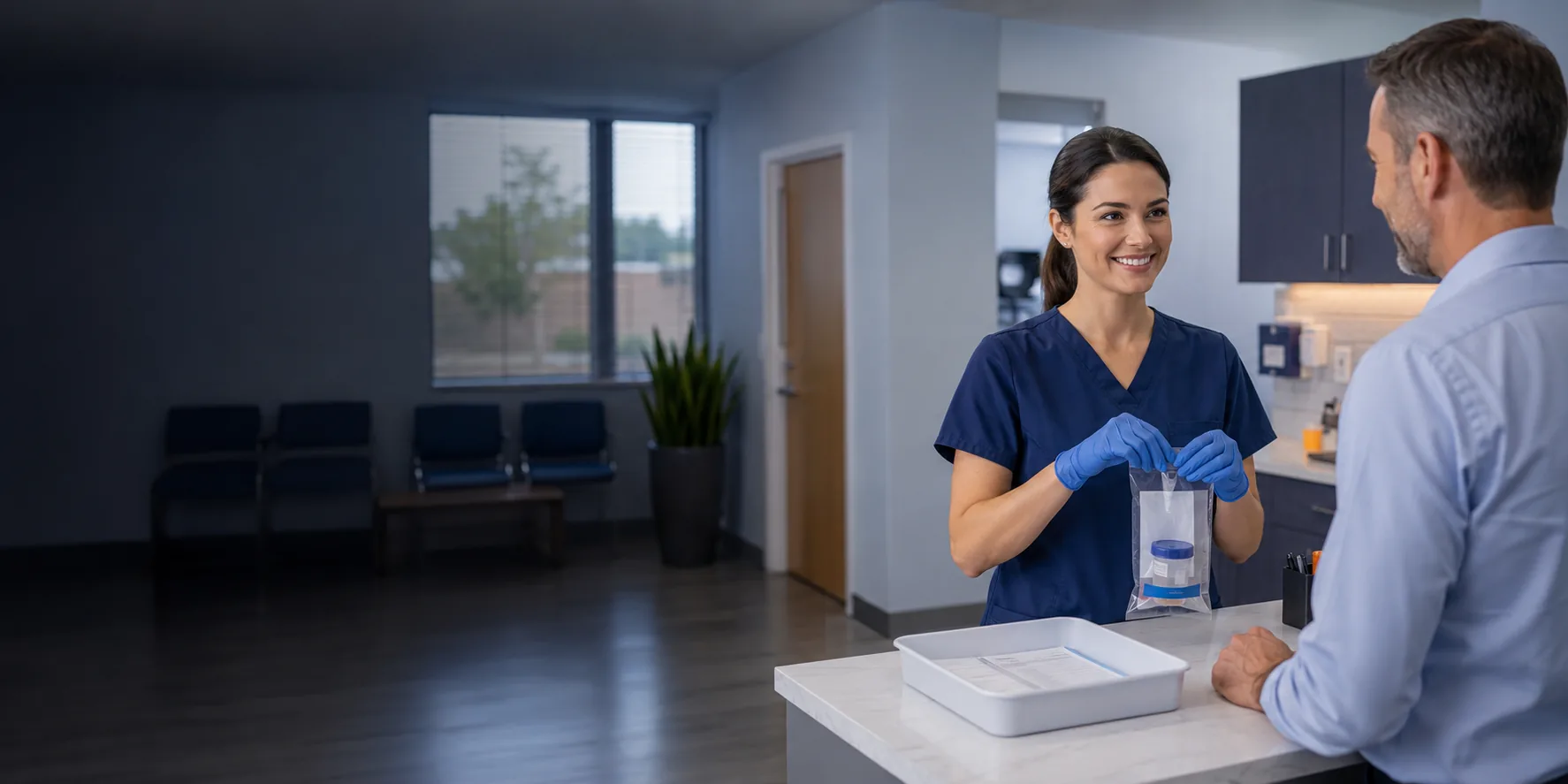
Urine, hair, and oral fluid collections use different specimen types and can serve different screening needs. Choosing between them should begin with the purpose of the test, the applicable program rules, and the services offered at the collection location.
Urine testing
Urine is widely used in workplace testing and is part of many established laboratory workflows. Depending on the program, collections may require specific documentation, identification, and chain-of-custody procedures. The available test panel and procedure should be confirmed before ordering.
Hair testing
Hair testing uses a collected hair specimen and is often selected by programs seeking a different historical view of substance exposure. Hair tests are not interchangeable with every regulated testing program. Collection requirements and interpretations vary by provider and test.
Oral fluid testing
Oral fluid collections use a mouth swab or similar device. They may offer a convenient collection process for certain purposes, but available options depend on the testing panel, laboratory, and regulatory requirements. Ask whether your desired collection method is supported at your chosen site.
Four questions to ask
There is no single best specimen type for every person or employer. Consider:
- Is the test DOT-regulated or non-DOT?
- What substances and test panel are required?
- Which specimen types and collection sites are available?
- What identification, authorization, and reporting steps apply?
Before scheduling
Read the individual test description and confirm the collection requirements. If the testing program has a written policy, use that policy rather than selecting a method based only on convenience or price.
Related resources: Explore testing options · Get ordering help